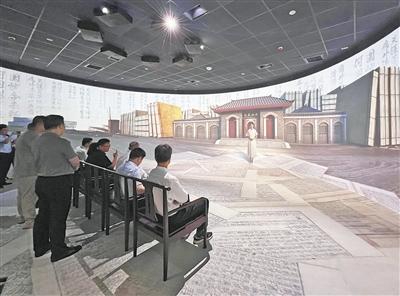
AI Enhancements in Cultural Tourism
The 14th Five-Year Plan emphasizes the role of digital technologies and data in enriching people’s lives and improving welfare across various sectors, including education, healthcare, and cultural tourism.
In Hunan’s Hengyang, the Chuan Shan Academy utilizes artificial intelligence to create immersive cultural experiences. In Hangzhou, the AI guide “Hang Xiao Yi” serves as a digital tour guide, while Dalian’s smart tourism platform “Xing You Dalian” offers personalized itineraries. These advancements are rapidly transforming cultural tourism into more immersive, intelligent, and personalized experiences.
Immersive Cultural Experiences
In the spring at Chuan Shan Academy, visitors don AR glasses to engage in a time-traveling dialogue with the historical figure Wang Fuzhi, who interprets the philosophy of the “Zhou Yi Wai Zhuan”. This immersive scene brings to life philosophical wisdom from over 300 years ago.
Founded in 1878, Chuan Shan Academy is a vital source of Huxiang culture, promoting the ideas of philosopher Wang Fuzhi, who emphasized practical application of knowledge. Previously, static exhibitions failed to convey the essence of Wang’s thoughts fully. By 2025, the academy plans to launch the AI Digital Human project, utilizing natural language processing to present Wang’s likeness and engage visitors in dialogue. Visitors can interact with the virtual Wang and trigger AR annotations of his works, transforming classical texts into dynamic interpretations.
“We want visitors to engage actively with knowledge, not passively receive it,” said Chang Bin, the planning manager at Chuan Shan Academy.
Visitors can ask the AI, “How does the master view the relationship between knowledge and action?” and receive insightful responses. “It’s not a one-way lecture but a dialogue of ideas,” remarked visitor Zhou Liqian.
Families find this immersive experience more engaging than traditional history lessons. Data shows that by 2025, visitor numbers at the academy are expected to increase by over 110%, with educational groups making up nearly 60% of the total. Parents believe this immersive dialogue can ignite their children’s interest in learning.
The AI Digital Human project is based on extensive analysis of Wang’s writings and correspondence, ensuring that the dialogue adheres strictly to his philosophical principles. “We filtered out any subjective biases that AI might introduce,” explained the project lead.
At Chuan Shan Academy, technology and culture intertwine, allowing traditional wisdom to be passed down through innovative means.
Smart Digital Guides
At West Lake in Hangzhou, visitor Yuan Meng interacts with the city’s digital tourism guide, “Hang Xiao Yi”, which provides real-time information and recommendations.
“Is there a crowd at Leifeng Pagoda right now?” Yuan asks, and the system promptly responds with current visitor numbers. “This is much more convenient than checking my phone; it feels like having a free tour guide!” she exclaimed.
When Yuan requests a tour route for the Broken Bridge, “Hang Xiao Yi” quickly suggests a scenic boat trip, detailing the best sights along the way.
“Hang Xiao Yi” not only introduces tourist spots but also shares historical and cultural insights, enhancing the overall experience. The guide also provides helpful reminders about nearby attractions.
“Using ‘Hang Xiao Yi’, management and businesses can better serve tourists while gaining valuable feedback to improve service quality,” said Bo Wengan, deputy director of Hangzhou’s cultural and tourism development center.
The director of the Hangzhou Handicraft Museum, Zhou Jia Yi, noted that many visitors now come specifically because of recommendations from “Hang Xiao Yi”. The museum showcases over 20 unique crafts and intangible cultural heritage techniques, allowing visitors to engage with the art.
Personalized Travel Planning
In spring at Dalian’s Lingjiao Bay, visitor Song Yao captures stunning photos with friends, crediting an AI platform called “Xing You Dalian” for suggesting the perfect locations.
The platform features an AI route planning function, allowing users to interactively generate travel itineraries. When Song Yao asks about the best spots to visit, the program suggests classic attractions like Dalian Ocean World and Dalian Forest Zoo.
After refining her request for picturesque locations, the program recommends trendy spots like Fisherman’s Wharf and Nanshan Cultural Street.
Song Yao appreciates the efficiency of the platform, which acts as a “travel concierge” that simplifies planning across various aspects of her trip. After a brief conversation, she receives a detailed two-day itinerary featuring key attractions and experiences.
“I’m very satisfied with this itinerary; it allows me to enjoy Dalian’s maritime culture while experiencing the city’s historical charm,” she said.
“By integrating AI technology, the ‘Xing You Dalian’ platform has evolved into an intelligent travel planner, enhancing planning efficiency and visitor experience,” stated Dan Meina, director of Dalian’s cultural tourism bureau. The platform has already attracted nearly 430,000 users.
Comments
Discussion is powered by Giscus (GitHub Discussions). Add
repo,repoID,category, andcategoryIDunder[params.comments.giscus]inhugo.tomlusing the values from the Giscus setup tool.