Is “Digital AGI” Dead? Amazon’s Restructuring Unveils a New Era
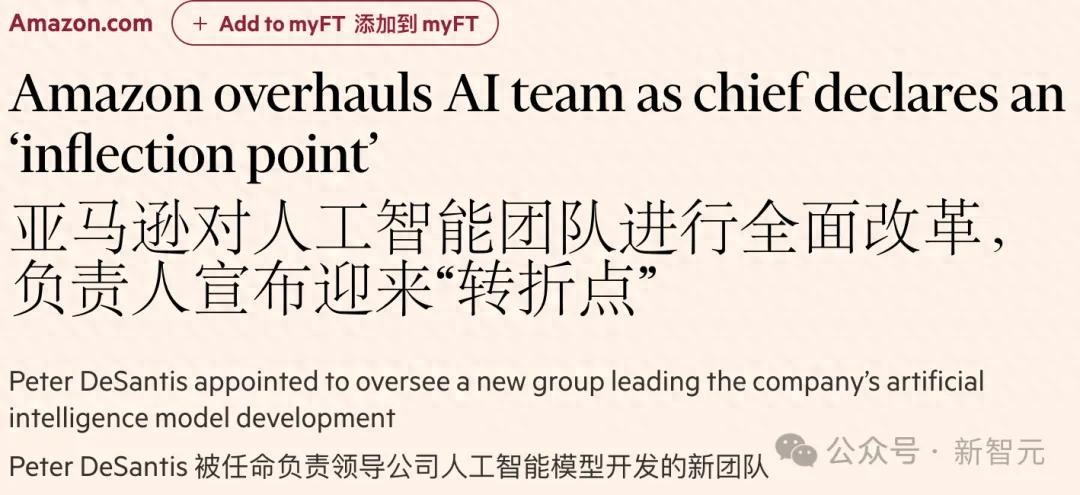
Amazon is tearing down the barriers of AI with a bold restructuring announced by CEO Andy Jassy. The Nova large model team, in-house chip division, and quantum computing research have been integrated into a single framework.
Simultaneously, Pieter Abbeel, a prominent figure in robotics and reinforcement learning, has officially joined Amazon’s AGI initiative. Rather than merely stacking parameters in the cloud, Amazon is merging computing power, models, and the physical world into a cohesive design.
In Amazon’s view, AGI should not just be a conversational entity but a physical entity with chips as its bones and algorithms as its soul.
Computing Power as a Strategic Asset
Peter DeSantis, a veteran known for his engineering delivery capabilities, is leading this integration. He is not only the head of cloud infrastructure but also a key player in Amazon’s chip development.
This appointment signifies that AGI is no longer just a research topic for model teams but a long-term engineering project requiring substantial investment. While some may see the merging of AGI, chip, and quantum computing teams as cumbersome, Amazon views it as a crucial decision regarding computing sovereignty.
In the AGI race, algorithmic advantages often have only a few months of relevance, while cost advantages provide a lasting competitive edge. Silicon Valley giants have long struggled with Nvidia’s supply constraints, and Amazon aims to break this cycle through vertical integration. Their self-developed Trainium 2 series chips have already demonstrated ambition in training performance and energy efficiency.
By combining the AGI team with the chip team, every line of code in the Nova model can be optimized at a “pixel level” on their custom chips, akin to Apple’s unique M-series chips, allowing Amazon to drive complex models at a significantly lower cost than competitors. For Amazon, computing power is not merely a resource but a strategic boundary.
Pieter Abbeel and the Next Phase of AGI
If the structural reorganization is the “skeleton,” then Abbeel’s involvement adds the “soul” to this framework. Over the past two years, improvements in large model capabilities have increasingly relied on scaling rather than paradigm shifts. Amazon’s significant investment in Abbeel stems from the AGI competition facing a hidden bottleneck: the depletion of high-quality text data on the internet.
Abbeel, a key figure in robotic learning and reinforcement learning, has a long academic history and has mentored many influential figures in contemporary large model research.
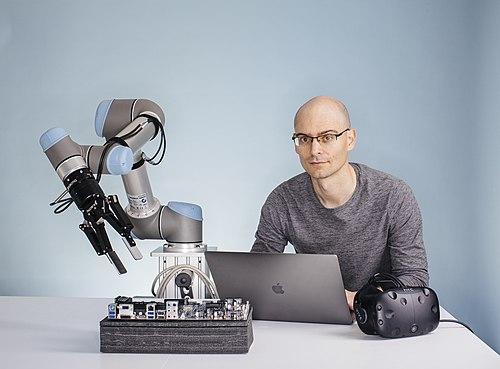
While most models are still trapped in virtual character worlds, Abbeel brings insights about the “real world.” He believes that AI’s ultimate evolution must occur through real-time interaction with the physical world, known as “embodied intelligence.”
Amazon possesses the world’s largest logistics and warehousing network, along with thousands of Proteus autonomous mobile robots. Unlike research robots in labs, these systems operate in highly standardized yet extremely large real-world environments, providing perfect samples for collecting data on physical laws.
In Abbeel’s research framework, AGI’s ultimate form is not limited to screens. Amazon envisions AGI as a “super workforce” capable of understanding vague commands, sensing gravity and friction, and accurately manipulating objects in chaotic warehouse or home environments.
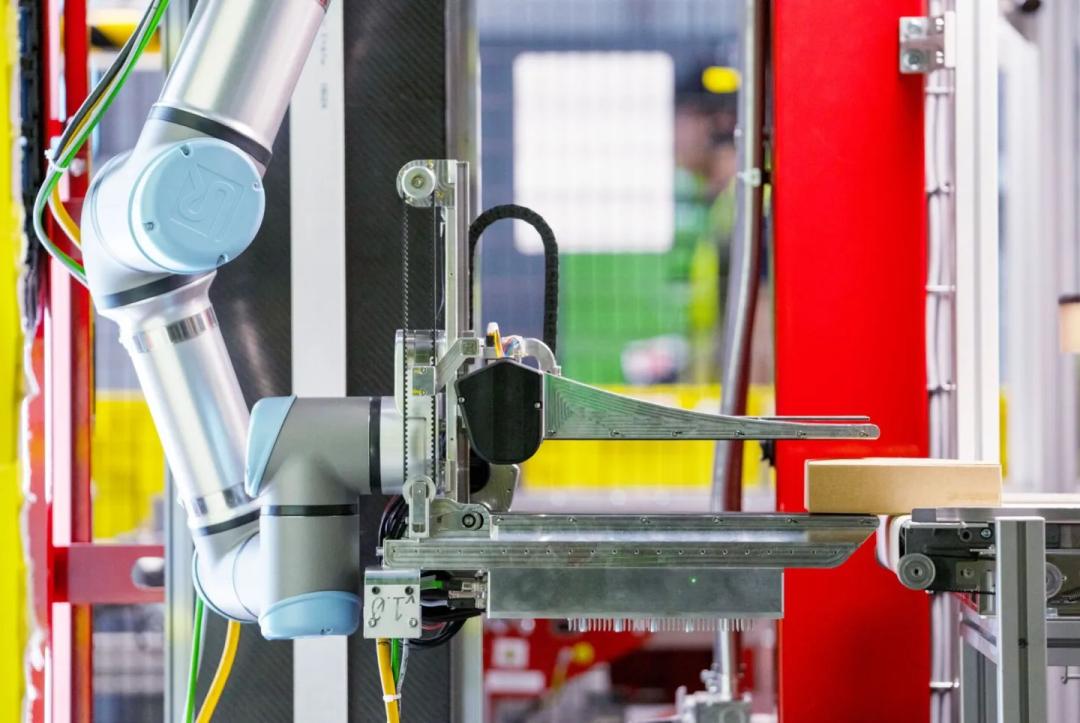
When the logical reasoning of the Nova model combines with Abbeel’s physical manipulation techniques, AGI will evolve into an “omnipotent craftsman.” This closed-loop from cloud to fingertips gives Amazon’s AGI an unprecedented weight, rooting it in steel and algorithms rather than floating in the digital ether.
Amazon’s Unique Path in the Industry
In the broader industry landscape, Amazon’s choice stands out. On one side are the “cloud intelligence” advocates, represented by Microsoft and OpenAI, who possess strong logical reasoning abilities but remain trapped behind screens, lacking interaction with the physical world. On the other side are the “all-rounders” like Google, who, despite having DeepMind’s technological foundation, struggle with internal organizational fragmentation, making it difficult to create a true closed loop between cutting-edge algorithms and hardware manufacturing.
Amazon is pursuing a third path: driving models through scenarios and reshaping ecosystems through closed loops. This approach requires sufficient, realistic, and long-term operational physical scenarios. Compared to purely software giants like OpenAI, Amazon’s greatest advantage lies in its global fleet of over 750,000 industrial robots.
In Silicon Valley, training data often needs to be purchased and cleaned; in contrast, the physical world itself serves as a continuously running data source for Amazon.
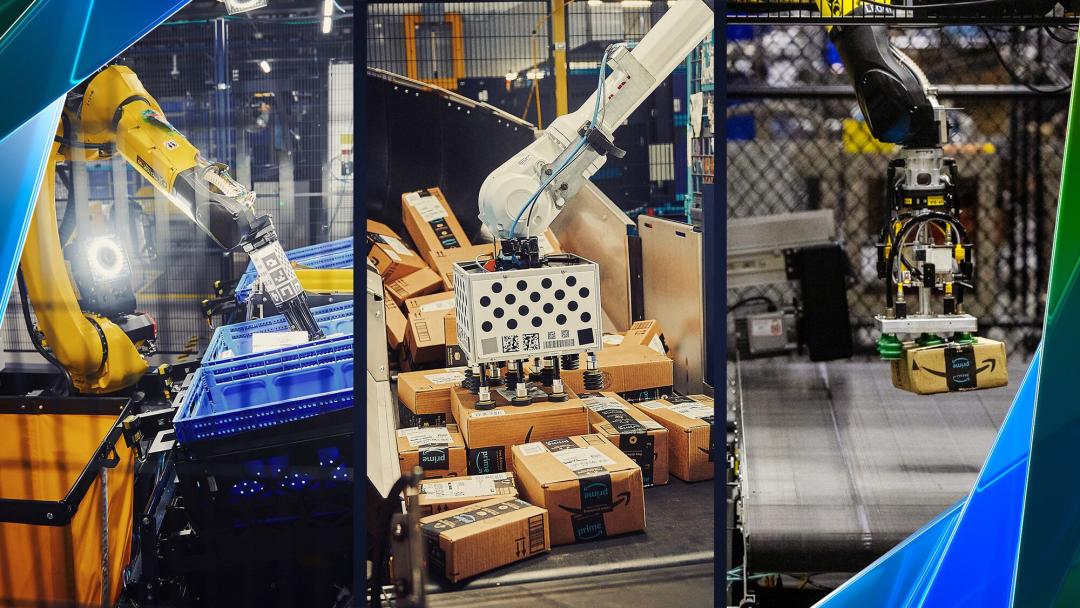
While competitors rely on Reddit posts to teach AI about the world, Amazon can utilize its automated centers worldwide to gather data on gravity, resistance, and friction from real-world interactions, training an AGI that truly understands physical laws. This path highlights Amazon’s commercial arrogance and its ultimate confidence.
If AGI must ultimately serve the real economy, those who control physical scenarios will dictate the rules. The high barriers to entry in “heavy asset” competition leave startups that depend solely on third-party computing power and lack physical scenarios at a disadvantage in this long race.
AGI Enters the Industrial Age
The collaboration between Pieter Abbeel and Peter DeSantis signifies not just a personnel change but a shift in power within the AI industry. For a long time, AI advancements have heavily relied on individual heroism and algorithmic ingenuity in laboratories.
However, with the proliferation of industrial-grade models like Amazon Nova and the demand for large-scale computing foundations like Trainium 2, the barriers to entry in the AI race have fundamentally changed. We are witnessing the end of the “laboratory era” and the dawn of the “industrial age.”
Future AGI will belong only to a select few capable of achieving a “full-stack closed loop.” This closed loop encompasses not just code but also a physical connection between “computing power, brain, and body.”
Amazon’s gamble defines a stark new reality: if the latter half of the AGI race is embodied intelligence, then whoever possesses the cheapest computing sovereignty and the most authentic physical interaction data holds the ticket to the future.
From this moment on, the competition for AGI is no longer a game that all companies can participate in. Instead of repeatedly debating whether AI will replace specific jobs, we should focus on another issue: when AGI steps out of the lab in its steel armor, it will fundamentally reshape humanity’s relationship with the physical world. That day is accelerating towards us with Amazon’s power restructuring.
Comments
Discussion is powered by Giscus (GitHub Discussions). Add
repo,repoID,category, andcategoryIDunder[params.comments.giscus]inhugo.tomlusing the values from the Giscus setup tool.